Markets Continue to Climb While the Economy Sends Mixed Signals
As we move through the second quarter of 2026, investors continue to navigate an environment characterized by conflicting signals. Equity markets have maintained a bullish posture despite mounting evidence that the broader economy is losing momentum. This divergence between market behavior and economic fundamentals remains one of the most important themes shaping investment decisions today.
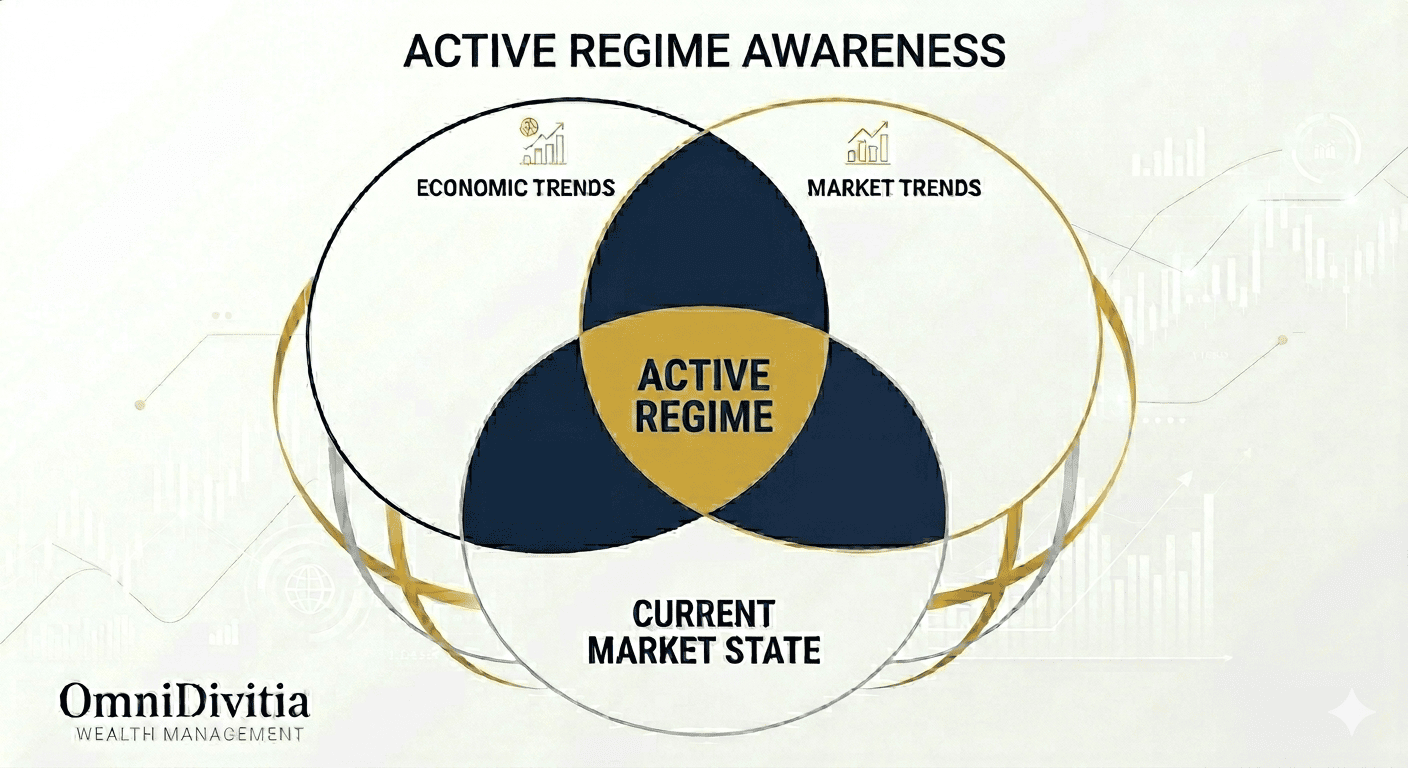
Our Active Regime Analysis framework evaluates three key dimensions of the investment landscape:
Economic Trends
Market Trends
Current Market State
Together, these factors help identify potential risks, opportunities, and regime transitions before they become obvious to the broader market.
Current Regime Overview
The second quarter began with an encouraging shift. April marked a transition from a Neutral Market State to a Bullish Market State while both Economic Trends and Market Trends registered as Improving. At first glance, this suggested a more favorable backdrop for risk assets. However, May introduced a more nuanced picture.
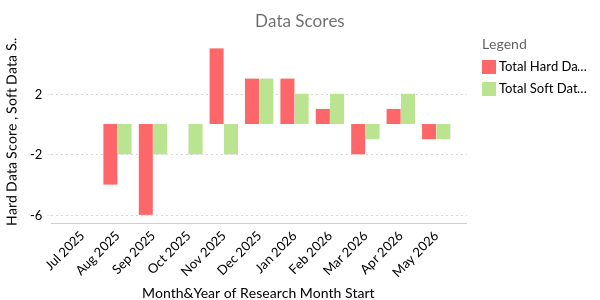
While market trends remained positive and the market continued to exhibit bullish characteristics, Economic Trends slipped from Improving to Mixed. This change occurred while valuations remained firmly in overvalued territory and the economy continued to reside within a Peaking phase.
The result is a market that continues to reward risk-taking, but with a narrowing margin for error. I would consider this a regime with "Hidden Exhaustion", leading toward a potential late-cycle plateau.
The Return of Regime Disconnect
One of the most notable developments during May was the reappearance of a regime disconnect. A regime disconnect occurs when market behavior and economic conditions tell materially different stories. In this case, investors remain optimistic and market momentum remains constructive, while underlying economic data has become increasingly inconsistent. Historically, these periods deserve careful monitoring, and can take multiple months to confirm. Markets can continue advancing for extended periods despite weakening economic fundamentals, particularly when liquidity, sentiment, or expectations remain supportive. However, disconnects may precede periods of increased volatility as markets eventually reconcile with economic reality. This does not imply an imminent market decline. Rather, it suggests that investors should remain disciplined and avoid assuming that recent market strength automatically translates into lower future risk.
What the Economic Data Is Telling Us
The economy currently looks like it is entering a Peaking phase, a stage that often represents the latter portion of the business cycle's expansion.
Characteristics of a peaking environment typically include: slowing economic growth; moderating corporate earnings expectations; increasing sensitivity to monetary policy; & greater dispersion among sectors and asset classes. Presently, monetary policy could be redefined in upcoming months as Kevin Warsh takes over the role as Federal Reserve Chairman. We definitely have increased dispersion among sectors and classes. However, earnings expectations are ascending due to the focus on AI and a narrow group of related companies.
While we have not observed a broad deterioration in economic conditions, the shift from Improving to Mixed economic trends suggests that forward momentum has become less uniform. Specifically, while the overall 6-month trend still shows improvement, the monthly information shows smaller increases, reflecting a potentially slowing economy.
What the Markets Are Telling Us
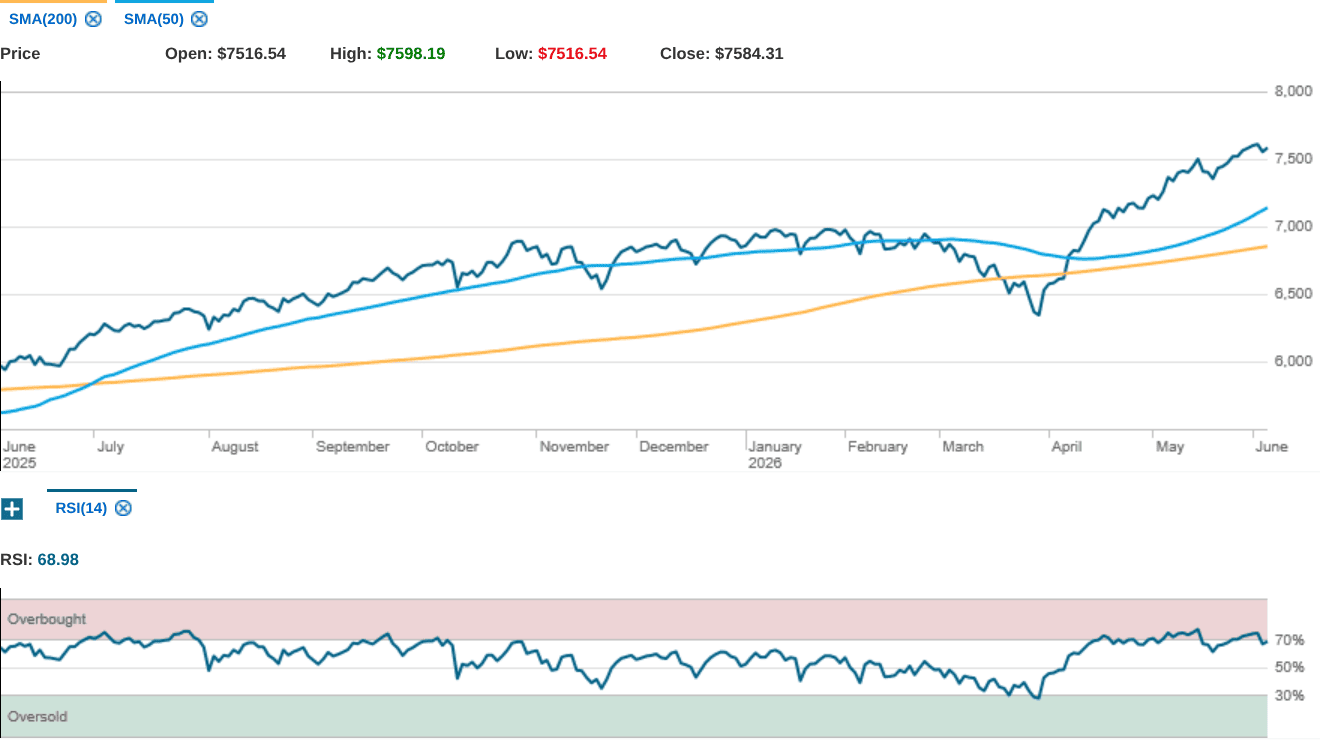
In contrast, market trends remain constructive. The six-month Market Trend remains Improving, and the overall Market State remains Bullish. This indicates that investor sentiment, price momentum, and risk appetite continue to support higher asset prices.
Bull markets rarely end simply because valuations are elevated. In fact, markets can remain expensive for extended periods when investors believe future growth and earnings will justify current prices.
Nevertheless, elevated valuations reduce the margin of safety available to investors and increase the market's vulnerability to unexpected economic disappointments.
Looking Ahead
The key question for the remainder of 2026 is whether economic trends stabilize and begin improving again or whether the recent softening develops into a broader deterioration.
If economic conditions strengthen while market trends remain positive, the current bull market could continue with relatively healthy foundations.
Conversely, if economic trends weaken further while valuations remain elevated, the current regime disconnect may widen, increasing the probability of market volatility and a potential shift toward a more defensive environment.
For now, the evidence suggests remaining invested while maintaining heightened awareness of evolving economic conditions. The market continues to reward optimism, but the economic backdrop is becoming increasingly important to monitor. As always, successful investing is not about predicting every market move. It is about understanding the current regime, managing risk appropriately, and remaining disciplined as conditions evolve.
Disclaimer: Portions of this post were written with the assistance of artificial intelligence (AI). Please schedule a call to discuss your specific situation more in depth.